
Energy Audit Malaysia: Cost, Process and ROI Explained (2026 Guide)

Updated: Jul 28
What Is an Energy Audit?
An energy audit is a systematic evaluation of how energy is consumed within a facility.
The objective is to:
Identify inefficiencies
Reduce energy costs
Improve equipment performance
Enhance sustainability
Why Businesses Conduct Energy Audits
An energy audit helps organisations:
✅ Lower electricity costs
✅ Improve operational efficiency
✅ Extend equipment lifespan
✅ Reduce carbon emissions
✅ Support ESG initiatives
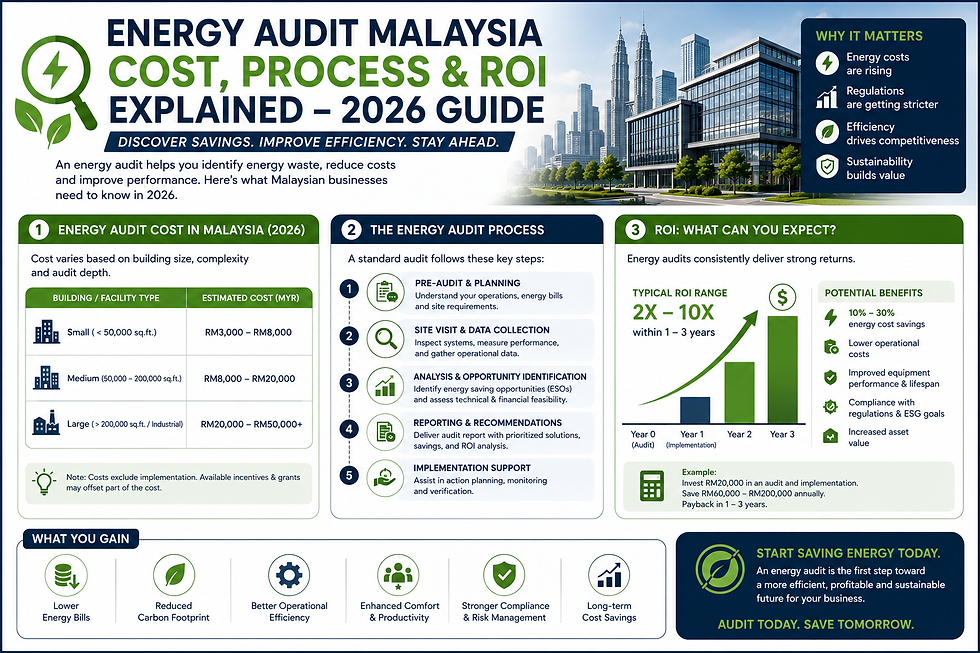
What Happens During an Energy Audit?
Step 1: Data Collection
The auditor reviews:
Electricity bills
Equipment specifications
Operating schedules
Maintenance records
Step 2: Site Inspection
The team evaluates:
HVAC systems
Lighting systems
Pumps and motors
Building management systems
Step 3: Measurement and Analysis
Specialised instruments are used to measure:
Power quality
Energy consumption
System performance
Step 4: Recommendations
The report typically includes:
Energy-saving opportunities
Investment costs
Potential savings
Estimated payback periods
How Much Does an Energy Audit Cost in Malaysia?
The cost depends on:
Building size
Complexity
Number of systems involved
Typical ranges:
Facility Type | Estimated Cost |
Small Office | RM5,000 – RM10,000 |
Medium Building | RM10,000 – RM30,000 |
Large Facility | RM30,000+ |
How Much Can Businesses Save?
Many organisations achieve:
5–10% savings from operational improvements
10–20% savings through equipment optimisation
More than 20% savings with major upgrades
What Is the ROI?
Most energy-saving initiatives have payback periods between:
1 to 3 years
Less than 12 months for low-cost improvements
Industries That Benefit Most
Hotels
Hospitals
Shopping malls
Universities
Data centres
Manufacturing facilities
Conclusion
An energy audit is one of the most effective investments a business can make to reduce costs and improve sustainability.
By understanding where energy is being consumed and implementing targeted improvements, organisations can unlock significant savings while strengthening long-term operational resilience.
Find Out Where Your Energy Is Going
Many organisations are surprised to discover that simple operational improvements can deliver substantial savings.
An energy audit provides the insights needed to make informed decisions and prioritise the initiatives that generate the highest return on investment.
At IS Ikhlas Suci, we work with businesses across multiple industries to improve energy performance and achieve long-term sustainability goals.


Comments